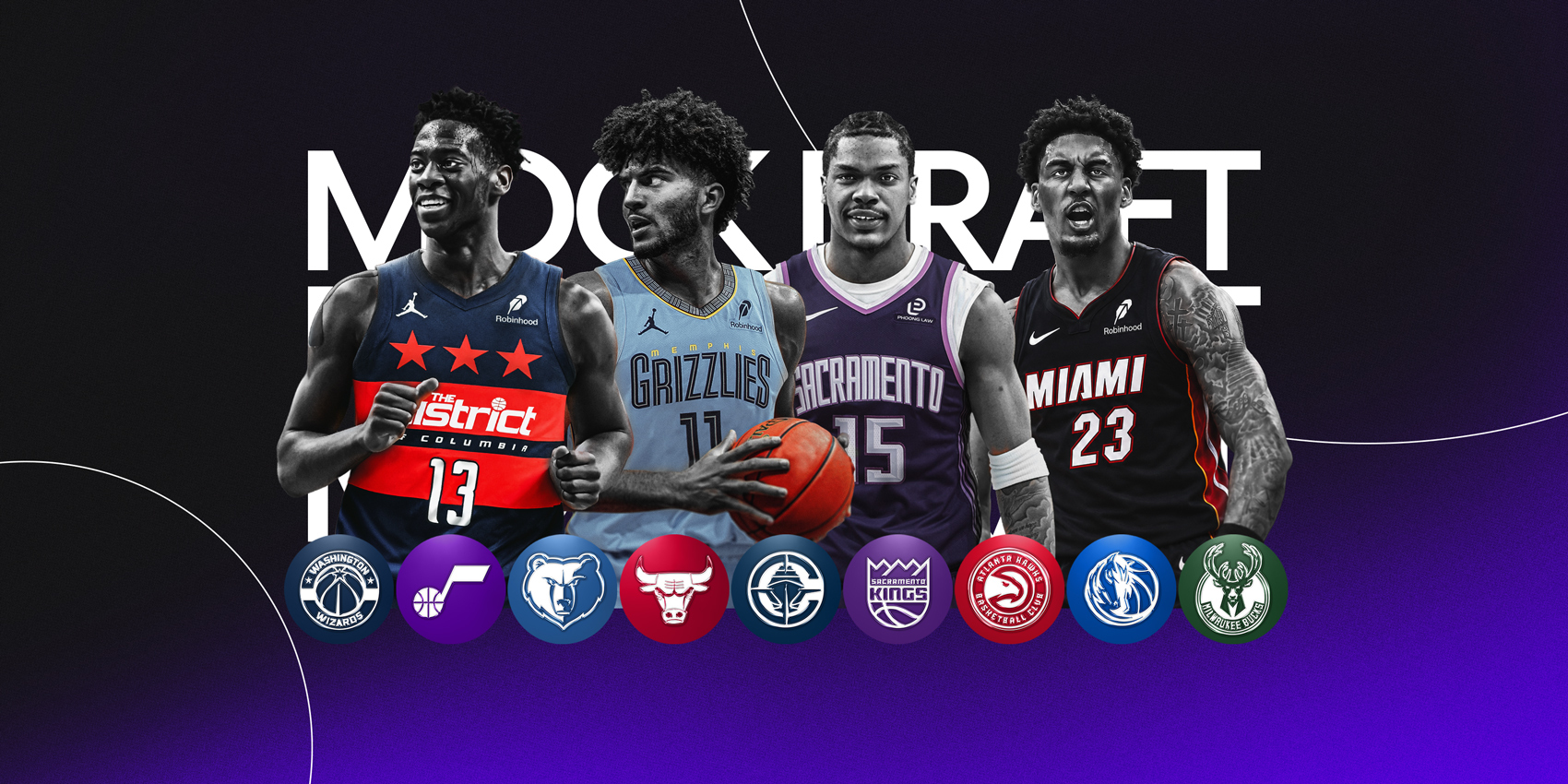
The NBA Finals are here between the Knicks and Spurs, which means 28 other teams across the league are solely focused on their offseasons. Workouts are happening every day across the country right now, as teams are figuring out what their priorities will be come draft night. Based on all the latest intel around the league, here’s my latest two-round mock draft:
“Ask Kevin O’Connor”
Check out the debut of our new interactive feature on the NBA Draft Guide, which delivers AI-powered answers to your NBA Draft questions written in Kevin O’Connor’s style and drawing from his in-depth analysis.
1. Washington Wizards
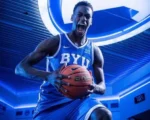
AJ Dybantsa, 6-9, BYU freshman forward
BYU forward AJ Dybantsa and Kansas guard Darryn Peterson are the favorites to go first, though Duke’s Cam Boozer remains on the radar, per league sources. Wizards president Michael Winger has already said on the record that the front office will consider trading down to accumulate assets. Over the past 46 years, the team holding the No. 1 pick has traded down and stayed in the lottery only three times: in 1980, 1993, and 2017. It is a rarity and would take a lot of guts for Washington to make such a decision.
For now, the most likely scenario is staying put and taking Dybantsa, who could become one of the NBA’s most unstoppable shot-creators. At 6-foot-9, he has a special blend of athletic tools with the way he bends, shifts, and explodes with the ball in his hands. He gets to the rim at will, cooks in the midrange, draws fouls at a high rate, and displays point-forward potential. In Washington, the pressure will be alleviated on him early in his career, now that he’s teammates with veterans Trae Young and Anthony Davis. In the longer term, Dybantsa fits: Alex Sarr already looks like an effective two-way big, while guards and wings like Kyshawn George, Tre Johnson, Will Riley and Bilal Coulibaly have all shown flashes. But none of them projects to be a superstar like Dybantsa, whose upside will be determined by whether he can become a knockdown 3-point shooter, as well as a more impactful defender to take full advantage of his physical tools. But even with those areas for improvement, Dybantsa has an MVP ceiling.
2. Utah Jazz
Darryn Peterson, 6-5, Kansas freshman guard
Ever since the Jazz moved up to the second pick, the talk became about whether the team would try to flip spots with the Wizards so they could draft Dybantsa — who went to Utah Prep then BYU, where owner Ryan Smith, Danny Ainge and Austin Ainge all went and still have strong ties to this day. Maybe that is exactly what’s happening. But maybe they’d prefer to stay put and Peterson ends up the best in the class anyway.
Peterson is a buttery smooth scorer with a blend of fluid body control and positional size that gives him the ingredients to become an elite NBA player. At the high school level, he was a dynamic playmaker who used his burst to get into the teeth of defenses and generate buckets for himself and his teammates, while also showing off the kind of shot-making that draws comparisons to Hall of Famers. At Kansas, he thrived in an off-ball role, stroking jumpers out of movement actions and showing he can scale up or down depending on what a roster needs. Even when he isn’t scoring, he’s a high-impact defender who causes chaos off-ball and has the 6-foot-10 wingspan to switch screens. The concern isn’t his game. It’s his body. He missed 11 of 35 games and pulled himself out of others due to cramping, which he claims was due to taking creatine. Maybe he’ll end up worth the risk for Utah given the deep amount of veteran and young talent already existing on the roster. Much like Ace Bailey last year, Peterson could ease into his NBA routine as a rookie.
Play 2026 Soccer Pick ‘Em with FOX One and make your picks for the world’s biggest soccer tournament
3. Memphis Grizzlies
Cameron Boozer, 6-8, Duke freshman forward
Boozer is the most polished player in the class. He scores from the post with both footwork and power, hits 40% of his 3s on high volume, and has enough handle to run offense as a point forward. He shifts between those modes based on what the defense gives him, and that adaptability led to a 35-win season at Duke and the Naismith Player of the Year award.
The worry is that he’s not a vertical athlete and the foundation of all that production — overpowering smaller defenders — gets diminished against NBA length. Plus, he’s a modern tweener on defense, lacking the explosiveness and size to protect the rim full-time and the lateral quickness to switch onto guards. But Boozer is at his best defensively when paired with a true center, and in Memphis he’d have one by his side in Zach Edey. With Cedric Coward, Jaylen Wells, and the other young guys in Memphis — plus whatever pieces get dealt for Ja Morant, who remains likely to get traded this summer — the Grizzlies now have one of the league’s best young cores. With the bloodline of two-time All-Star Carlos Boozer, the Grizzlies are betting that skill, adaptability, and a track record of winning at every level all lead to superstardom.
4. Chicago Bulls
Caleb Wilson, 6-9, North Carolina freshman big
League sources say the Bulls hosted a workout Tuesday featuring four potential lottery picks: guards Keaton Wagler and Kingston Flemings, and forwards Nate Ament and Morez Johnson. Chicago also holds the 15th pick, but it’s more likely than not Wagler, Flemings and Ament (and possibly Johnson) are all gone by that selection. So it has front office executives curious: Could Chicago be open to trading down from this fourth pick? Or could Chicago be looking to trade up from 15th? Or could Chicago shock everyone with the choice here? Time will tell.
But for now, Wilson stays as the choice. Wilson is the most gifted athlete in the draft. He’s 6-9 with springs for legs. When he’s flying above the rim, finishing through contact, and chasing down every shot in his area code, he looks like a future franchise cornerstone. That’s exactly what the Bulls need in the frontcourt. But Wilson isn’t a sure thing. He made too many aloof rotations as an off-ball defender at North Carolina, and the speed of NBA offenses will test him even more. He also won’t be sharing the floor with two bigs like he often did in college. On offense, Wilson has never shot jumpers with any consistency at any level, so it’d be a bonus if he can figure that out. And he might have to for Josh Giddey and Matas Buzelis to be optimized. Still, even without the jumper, he has star upside.
5. Los Angeles Clippers
Mikel Brown Jr., 6-4, Louisville freshman guard
The Clippers are widely considered by league sources as the most likely team to trade down in this range. Different teams could be targeting different players. But the most common name mentioned is Brown, who has an unstoppable pull-up jumper, an ambidextrous finishing ability, and the quick reads to rifle passes before the defense has time to react. He had a 45-point breakout performance in February after a back injury dogged him all freshman year and then ended his year later in the month. The absences muddy the evaluation and leave real questions about his consistency that may not get answered until he’s fully healthy. But right now, he is, and all indications are that he is dominating workouts.
6. Brooklyn Nets
Nate Ament, 6-10, Tennessee freshman forward
A few weeks ago I reported the Nets were drawn to Nate Ament and Aday Mara. That remains true as we enter June, though there are still workouts to be done and there are plenty of teams interested in trading into this spot. For now, Ament gets the nod with this choice given Brooklyn already has so many guards on the roster. Players like Ament who can handle, shoot off the dribble and stand at 6-foot-10 don’t grow on trees. This physical foundation kept Ament in lottery consideration even after a dreadful start to his freshman season when he struggled to score efficiently and make an impact defensively. But over the second half of the year for Tennessee, he flipped a switch and shots began to fall. He averaged 23.8 points over a six-game stretch in January and February that reminded everyone why he was a top recruit. Then he dealt with an ankle injury that ruined his momentum entering March and severely struggled during the tournament.
7. Sacramento Kings
Darius Acuff, 6-2, Arkansas freshman guard
Weeks ago I reported the Kings are widely believed to be targeting Acuff with this pick. That reporting has since been supported by others in the industry, and that belief remains unchanged around the league. That said, the Kings are still working out other players and nothing is locked in. Just consider Acuff the favorite here. Acuff is not the biggest guard or the most explosive athlete, but he reads defenses like someone who’s been in the league for a decade. He emerged as a freshman as a skilled, low-turnover playmaker. And that’s not even what he’s best at. Acuff is a wiry scorer who can get a bucket from anywhere on the floor with a quick trigger, slippery handle, and a feel for manipulating defenses. He has a knack for clutch moments too. The question that follows every undersized guard into the draft is whether the brilliance survives contact with bigger, longer, faster defenders.
8. Atlanta Hawks
Keaton Wagler, 6-5, Illinois freshman guard
If draft night unfolds this way with a forward or big going ahead of some of the guards, someone will slip. Maybe it’ll be Wagler, much to the benefit of the guard-needy Hawks. Wagler showed up at Illinois as a four-star recruit with no expectations of becoming a one-and-done. But he quickly became the orchestrator of a high-powered Illinois offense with his high-IQ playmaking and crafty scoring. Then he scored 46 at Purdue against a top-ranked team in the country — the most points by any freshman in Big Ten history. Then he kept rolling, and led the team to an unexpected Final Four appearance. Now he’s a lottery lock, but he’s a quirky player in that he logged zero dunks. To become an NBA star, Wagler needs to overcome a lack of traditional athleticism. But the best case is that his feel for the game is enough for him to continue ascending.
9. Dallas Mavericks
Brayden Burries, 6-4, Arizona freshman guard
Adam Finkelstein of CBS Sports reported that Burries hasn’t taken many workouts and there is speculation that he’s trying to angle his way to Dallas. I also have heard that same chatter, which is why he lands here. To add some more color to that reporting: Burries is represented by Klutch Sports CEO Rich Paul, who steered Dereck Lively to the Mavericks with the 12th pick in the 2023 draft, even though some teams picking higher wanted to select Lively. It would make perfect sense for Klutch to want Burries to be the guard paired with Cooper Flagg for many years to come. Burries is a physical, versatile scorer who can beat you from all three levels, rebounds like a forward and competes hard on defense. But he’s a methodical creator rather than an explosive one, and his shooting history before Arizona gives scouts reason to wonder whether the efficiency is real or a blip.
10. Milwaukee Bucks
Kingston Flemings, 6-3, Houston freshman guard
The Bucks should take a swing to jump start their new era, whether or not Giannis Antetokounmpo is part of it. Flemings could be that type of bet since he plays with surgical midrange touch, an explosive first step and the passing vision of a true point guard who can run an offense. But Flemings is also 183 pounds and midrange-heavy in a 3-point league, and he watched his efficiency crater against the stiffest competition late in the season. The question is whether his scoring package translates against NBA length and spacing, or whether opposing scouts figure him out the same way late-season defenses did. Still, he brings incredible effort and passion to the floor and will likely maximize whatever he’s going to become.
11. Golden State Warriors
Aday Mara, 7-3, Michigan junior big
The Warriors need a true center. There is no better option in this range than Mara, who stepped on UCLA’s campus as a lottery-projected center from Spain. Then he fell off draft boards during two forgettable seasons there before transferring to Michigan and becoming one of the best true 5s in the country on his way to winning the national championship. He reads the floor like a guard, finishes with both hands, and swats shots with elite timing. The complication is he doesn’t shoot from outside, makes below 60% of his free throws, and opponents are going to attack him on the perimeter.
12. Oklahoma City Thunder
Karim López, 6-8, New Zealand Breakers international forward
It’s going to be a fascinating next few weeks for the Thunder after a heartbreaking Game 7 loss on their home court to the Spurs. And big changes could be coming with second apron restrictions and heavy luxury tax penalties coming their way. Thunder general manager Sam Presti could end up making moves around the margins to trim money, but don’t rule out a move involving Chet Holmgren or Jalen Williams either. It has also been widely reported that the Thunder could look to move up from this 12th choice. But if they stay put, López checks a lot of boxes with his excellent physical tools, hard-nosed approach, well-rounded ability to defend multiple positions and handle the ball, and blossoming shot. But he’s thus far more of a jack of all trades since his jumper runs hot and cold and he lacks the burst to blow by defenders off the bounce. Regardless, not every player is drafted with stardom in mind. López has all the requisite skills to enhance a star teammate as a key piece on a winning team.
13. Miami Heat
Yaxel Lendeborg, 6-9, Michigan senior forward
The Heat hosted Lendeborg for a workout in recent days, according to league sources. There is a belief in league circles that Lendeborg could end up being the third Michigan prospect selected on draft night – behind Aday Mara and Morez Johnson, who is rising on draft boards – but for now he holds his slot in the lottery for this mock. Lendeborg has a compelling story. Poor grades kept him off his high school varsity team. He went to a JUCO. Then UAB. Then he entered the draft, went through the combine, pulled his name back, and came back for one more year at Michigan and won a national championship. He just kept getting better every single time the competition got harder. He fills the stat sheet, he can play multiple positions, and he has a 7-foot-4 wingspan at 241 pounds with a genuine handle. But he’ll be 24 as a rookie. The arc is a great story. Whether it ends with NBA stardom is still up for debate.
14. Charlotte Hornets
Morez Johnson Jr., 6-9, Michigan sophomore forward
You know the guy on a championship team who never gets enough credit nationally? The one who sets the bone-crushing screen that springs the star, then immediately sprints to the rim for the lob, then turns around and blows up the other team’s pick-and-roll on the other end all in one sequence? That’s Morez Johnson. He transferred from Illinois to Michigan and became the connective tissue of the national champions as a 251-pound wrecking ball with surprisingly soft hands and the defensive IQ to guard 1 through 5 in a switch-heavy scheme. And the Hornets are in need of someone with Johnson’s multi-position versatility since Miles Bridges, Josh Green, and Grant Williams all have just one more season on their contracts. The issue with Johnson is he’s not quite big enough to be a true center and not yet proven enough as a shooter to guarantee he spaces the floor. But even without a jumper, Johnson has a long future ahead of him at the next level – and that is why league sources say his stock is on the rise into the mid-late lottery range.
15. Chicago Bulls
Cameron Carr, 6-5, Baylor sophomore wing
After selecting Wilson in the lottery, the Bulls can turn toward finding a wing to support their core. Carr led Baylor in scoring, shot nearly 40% from 3 on high volume, and looked like a 3-and-D role player who also has blossoming skills off the dribble. With NBA genes in his blood, as the son of former player Chris Carr, Cameron has the skills to make it in the NBA. At 184 pounds, he’s going to get introduced to the league’s physicality in a way college basketball never did. But he got off to a sensational start by dropping 30 points in the first scrimmage of the Combine, which helped increase his chances of ending up in the lottery.
16. Memphis Grizzlies
Ebuka Okorie, 6-1, Stanford freshman guard
With Ja Morant’s future likely not in Memphis, it’s time to find a point guard after selecting Boozer with the third pick. Okorie is the best driving guard in the class, a 6-1 jitterbug who manipulates defenders with a tight handle, sudden changes of speed, and an advanced feel for the game. He’s not an above-the-rim athlete, though, and not long ago he was a kid from New Hampshire who ranked outside the top 100 and committed to Harvard. Then Stanford found him, he flipped his commitment, and he proceeded to lead the ACC in scoring with eight 30-point games and a habit for hitting clutch shots. Maybe Memphis saw the limitations of having a small guard after the Ja experience. But Okorie’s talent could be too hard to pass up.
17. Oklahoma City Thunder
Luigi Suigo, 7-3, Mega international big
Suigo has until June 13 to decide if he’s going to stay in this year’s draft or commit to a college – likely Villanova. In all likelihood, he’s heading to school. But there’s still some chatter around the league about him sneaking into the first round. To play with that idea in this mock, let’s put Suigo on the Thunder, a team in need of a giant center in his mold. Suigi has said he wants to be the Italian Wemby and, at 7-3 with passing feel and shooting touch, you can see why a teenager might put that out into the universe. Suigo lacks the handle and self-creation chops to ever be the best player on a team, but his dynamic skills as a passer, shooter, and lob threat layer cleanly on top of baseline center duties as a screener, finisher, and rim protector. Becoming the Italian Marc Gasol is a more realistic goal, and would still be an excellent outcome.
18. Charlotte Hornets
Hannes Steinbach, 6-10, Washington freshman big
With two top-20 picks, it’s a gift of an opportunity for the Hornets to build around their core. Here they get another big to bolster the frontcourt. Steinbach played professionally in Germany before enrolling at Washington, and he’ll enter the NBA with some readymade skills as an interior scorer and rebounder. He has massive hands that he uses to grab every possible rebound and finish effectively around the basket. He also showed legitimate touch on 3-pointers in flashes, which would turn him into a very different player if it becomes real. But he’s not quite a true 7-footer, and there are specific matchups where he gets targeted in space. It’s encouraging, though, that he bulked up from 220 to 248 pounds from the start of his freshman year at Washington until now. He was already strong, and now he’s making the case that he can be a true center for any team.
19. Toronto Raptors
Labaron Philon, 6-3, Alabama sophomore guard
The Raptors clearly needed two things after their Game 7 loss to the Cavaliers: A point guard and a center. Here, they get a point guard. Philon is a shifty, score-first point guard who blossomed into one of the best guards in college basketball as a sophomore. He doubled his scoring output with buttery floaters, a deceptive handle, and a feel for running an offense, while also beginning to shore up the shooting questions that once clouded his projection. But Philon is also a below-the-rim athlete and listed under 180 pounds, so his slight frame remains the one thing standing between him and stardom.
20. San Antonio Spurs
Allen Graves, 6-8, Santa Clara freshman forward
The Spurs are in the NBA Finals and don’t appear to be missing too much on the roster. But adding another forward to grow alongside Carter Bryant could be beneficial. Graves was a point guard before a late growth spurt, and the floor skills carried over when he sprouted to 6-foot-8. He came off the bench at Santa Clara as a redshirt freshman and quietly became one of the most efficient producers in college basketball. While he lacks great athleticism, and had some struggles against the limited top competition that he faced, the analytics love him, and he passes the eye test with his elite feel for the game.
21. Detroit Pistons
Meleek Thomas, 6-3, Arkansas freshman wing
The Pistons need more shooting and more creation. Thomas checks both boxes as a player who never hesitates to fire. Thomas has the confidence to “run for president,” according to Arkansas head coach John Calipari. You could see that on the court the way he stepped right into the lead role when Darius Acuff was sidelined at Missouri to close the regular season, and willed Arkansas to the SEC championship game with 29 points against Ole Miss. He’s a legit NBA shooter with deep range, a quick release, and creation juice off the bounce. But he doesn’t get to the rim, his shot selection drifts into hero-ball, and there are questions about how he’ll deal with NBA physicality.
22. Philadelphia 76ers
Chris Cenac Jr., 6-10, Houston freshman big
Finding a center to play behind Joel Embiid needs to be prioritized. Embiid simply cannot be trusted to stay on the floor. Cenac checks every box on paper as a superb athlete who moves like a wing, has the length to alter shots, and shoots from the perimeter. Houston handed him a starting role with national title aspirations and trusted him with heavy minutes. But the Cougars fell short again, in part because Cenac struggled to stay out of foul trouble, couldn’t score efficiently, and was overeager to play on the perimeter despite having the body of a bruiser. He arrived in college with lottery expectations, and he still could become that player in the future. But the NBA team drafting him is taking a project.
23. Atlanta Hawks
Dailyn Swain, 6-7, Texas junior wing
After Wagler fell into the laps of the Hawks with their top-10 pick, here they get another potential steal. Swain played two competent seasons at Xavier, transferred to Texas, and somehow became the most efficient isolation scorer in the entire country. He’s relentless getting to the rim, creative as a finisher, and active enough defensively to project as a switchable wing. But the reason he lives at the rim is because his jump shot is genuinely terrible. He has stiff mechanics, bad percentages, and a reluctance to even attempt it that goes all the way back to high school. Until the shooting becomes a credible threat, defenses are going to pack the paint and dare him to beat them from the outside.
24. New York Knicks
Jayden Quaintance, 6-9, Kentucky sophomore forward
The Knicks are in the NBA Finals, but with Mitchell Robinson entering free agency this summer it would make sense for them to bolster the frontcourt. As a freshman at Arizona State, Quaintance was blocking everything in sight, showing defensive instincts and mobility that players his size aren’t supposed to have. And he was 17 years old doing it. Then came the ACL, the meniscus, the fractured knee, the transfer to Kentucky, persistent swelling, and a shutdown for the remainder of his sophomore season. Much like Robinson, he’s also a borderline-hackable free-throw shooter. But he brings some intriguing skill as an open floor ball-handler too. The Knicks figured it out with Mitch, and maybe they could with JQ too.
25. Los Angeles Lakers
Zuby Ejiofor, 6-8, St. John’s senior forward
After Ejiofor’s freshman year at Kansas, Bill Self told him he wasn’t good enough to play major minutes on any Big 12 team. Three years later, he became the unanimous Big East Player of the Year, Defensive Player of the Year, Tournament MVP, and Scholar-Athlete of the Year — the first player in the league’s history to sweep all four in a single season — and he helped St. John’s bounce his former team in the Round of 32 on the way to the program’s first Sweet 16 in 25 years. The Lakers could use a frontcourt player with a winning pedigree like Ejiofor, who found success with foundational skills: motor, length, and defensive versatility. The question with Ejiofor is the fact he’s undersized for a center and his jumper is still a work in progress. But he’s developed enough to deserve a chance to figure it out in the league.
26. Denver Nuggets
Christian Anderson, 6-1, Texas Tech sophomore guard
The Nuggets need some variety to their half-court offense aside from having Nikola Jokić initiate everything. Well, here’s a guy who could help. Anderson showed up at Texas Tech as the 101st-ranked recruit and has played his way into the first-round conversation behind dynamic pick-and-roll creation and knockdown perimeter shooting. He does a good job of creating easier shots for his teammates, but at his small stature he hasn’t shown a consistent ability to get to the rim with any regularity. And any small guard will always be a target on defense, so there’s a lot of pressure on his shot translating to the next level.
27. Boston Celtics
Sergio De Larrea, 6-5, Valencia international wing
The Celtics had good luck last year taking Hugo Gonzalez in the late first round. Why not go with another Spaniard? De Larrea is a tall playmaking guard with major feel and a knockdown jumper who thrives within team concepts. He suffered a dislocated shoulder that ended his 2024-25 season and removed him from draft boards, but it ended up a blessing in disguise since he returned with a bigger role and stronger production for a great team in the EuroLeague. With size, smarts, and defensive versatility, he could carve out a role in the NBA if his international skill can translate.
28. Minnesota Timberwolves
Bennett Stirtz, 6-3, Iowa senior guard
Just look at how crucial Mike Conley still was to the Timberwolves in these playoffs. But he’s 38. And Ayo Dosunmu and Bones Hyland will both be upcoming free agents. The Wolves might need a guard. Stirtz feels the game at a different frequency than everyone else on the floor, and yet still makes scouts squint because he doesn’t look the part athletically. The question isn’t whether he can play, though. After transferring from Drake to Iowa, he kept cooking with bullseye passes, pump-fakes, and shooting touch off the dribble from NBA range. If he adjusts to the physicality and speed of the NBA, he could thrive as both a floor general and off-ball connector.
29. Cleveland Cavaliers
Koa Peat, 6-7, Arizona freshman forward
The Cavaliers need some toughness in the frontcourt. There may not be a better choice in this range than Peat, whose bloodline is so loaded with offensive linemen that it’s almost funny he ended up playing basketball. His father played nine NFL seasons. His uncle was a Pro Bowl tackle. Two brothers played college ball on the line. And you can absolutely see it in how he plays: powerful, physical, relentless, and it genuinely takes something special to stop him from getting to where he wants to go. He opened the season with a 30-point game against defending champion Florida and backed it up as one of Arizona’s best players all year. The concern is that he doesn’t really shoot, doesn’t create for himself off the dribble without assistance, and he’s not going to wow anyone as a vertical athlete.
30. Dallas Mavericks
Jack Kayil, 6-4, Alba Berlin international guard
Kayil is a combo guard with a strong frame, a feel for the game that exceeds his youth, and the grit to become a high-level defender. He just became one of the youngest players to ever win the German League’s Under-22 Player of the Year, joining Franz Wagner and Dennis Schröder on a list that bodes well for his NBA prospects. He committed to Gonzaga back in October, but has decided to stay in the draft — a decision that surprised some scouts since he has yet to prove he can shoot consistently or run an offense full-time. The speculation around the NBA is that Kayil received a first-round promise. If it’s Dallas, the fit makes perfect sense pairing Kayil next to Flagg given how they can share the ball. And his size would allow him to play next to Kyrie Irving early in his career. Maybe Kayil will end up going much higher, though, because there’s no denying his upside.
SECOND ROUND
31. New York Knicks: Alex Karaban, 6-7, UConn senior forward
Karaban makes defenses pay the moment they relax on him. He relocates for a 3, cuts when nobody’s watching, and does everything efficiently. He’s a similarly high-effort, high-IQ player on the defensive end, which helps him overcome his average athleticism. He’d be a perfect fit in this Knicks offense that leans on the strengths of a diverse set of offensive talents. But he’ll be 24 as a rookie, and hasn’t shown much upside. He rarely shoots off the dribble because of his funky mechanics. So if his role-player skills are slow to translate, his margin for error is narrower than for most.
32. Memphis Grizzlies: Henri Veesaar, 6-11, North Carolina junior big
Veesaar is an agile big with real shooting touch, connective playmaking, and baseline big skills with the ability to set screens and catch lobs. He also offers rim protection and is a locked-in help defender. In all three of his collegiate seasons, he made a massive leap in production each year. But he’s 227 pounds so his lanky frame can get pushed around, plus he still hasn’t fully defined his cornerstone skill. That’d be the appeal for Memphis: We could see some three-big lineups with Edey, Boozer, and Veesaar.
33. Brooklyn Nets: Tarris Reed, 6-10, UConn senior big
Reed is a throwback center who played at his best on the biggest stage on UConn’s way to the national title game. He does all the dirty work inside the paint as a finisher and rebounder and shot-blocker. But beyond his ability to screen and pass, he isn’t all too comfortable on the perimeter as a shooter or defender. So there are questions about his upside, especially since he’ll be 23 as a rookie. For the Nets, though, adding a rock solid center could simply help raise the floor of this team to make them more competent.
34. Sacramento Kings: Isaiah Evans, 6-6, Duke sophomore wing
Evans is the kind of shooter that defenses guard and think they’ve got him contained, then he uses a screen and catches it off a full sprint, moving away from the rim, and he somehow manages to rise into a perfect 3-pointer. He’s a legitimate sharpshooter with the off-ball chops to thrive without even running any offense for himself, and he also has a developing handle that could unlock more creation chances. But he’s still a perimeter-based player who needs to add more layers to his game to become a complete offensive talent. As the Kings build out this roster, they’re gonna need someone with his shooting prowess.
35. San Antonio Spurs: Joshua Jefferson, 6-8, Iowa State senior forward
Some players are drafted for their ceilings. Others for their floor. Jefferson lands in the latter category as a 22-year-old senior who spent four years in college getting better at everything to the point he’s a steady, high-feel forward. He can pass out of the post, make connective reads, and guard multiple positions. He just needs his shooting progress to prove to be real, and right now there’s not enough of a sample to be sure it is. If he ends up in San Antonio, there truthfully would not be a better landing spot for him to resolve that shooting concern.
36. Los Angeles Clippers: Maliq Brown, 6-8, Duke senior forward
Brown guards all five positions and has both the length and IQ to anchor the defense when he’s on the floor. As a 6-9 senior, he was named ACC Sixth Man of the Year and won the Lefty Driesell Award as the nation’s top defender. But he struggles to shoot the ball which will make his offensive fit a difficult one. Regardless though, his defense could be that special that his team can’t help but put him on the floor.
37. Oklahoma City Thunder: Ryan Conwell, 6-2, Louisville senior guard
Conwell’s college career took him from South Florida to Indiana State to Xavier, and then to Louisville, and he got better at every stop. By the end of his senior year he was the leading scorer for the Cardinals at 18.8 points per game. He’s a stocky 6-foot-2 lefty with broad shoulders, no real first step, and exactly one dunk in four years of college basketball. But he’s a knockdown shooter with deep range and a bruiser at the rim who absorbs contact like a fullback. It’s hard to imagine the Thunder keeping this pick, but if they do it probably means that some existing players on the roster were dealt away and adding another shot creator could end up necessary.
38. Chicago Bulls: Jaden Bradley, 6-3, Arizona senior guard
The Bulls have a lot of guards on the roster, but no one with Bradley’s type of hard-nosed style. Bradley is a 6-3 combo guard with a strong frame, a calm demeanor, and a knack for clutch moments. After arriving in college as a McDonald’s All-American, he lost his starting spot as a freshman at Alabama then transferred to Arizona, where he got better every year and became the team’s trusted leader. As a senior, he won Big 12 Player of the Year, Big 12 Tournament MVP, and led the Wildcats to their first Final Four since 2001. There are questions about whether he can be a lead guard at the next level, but his connective passing, improved shooting, and gritty defense all give him the potential to play big minutes.
39. Houston Rockets: Braden Smith, 5-10, Purdue senior guard
The Rockets took Reed Sheppard with the third pick in 2024, and while he’s shown some flashes, it’d make sense to hedge here with another guard who can create shots reliably. Smith left Purdue as the NCAA’s all-time assists leader, breaking a 33-year-old record. He’s arguably the highest-IQ player in the draft who could orchestrate an offense at the college level while also providing scoring off the bounce. But the issue is the one every 5-foot-10 guard faces: he isn’t a plus athlete, and bigger guards are going to hunt him the moment he steps on an NBA floor. That’s precisely why he is a projected second-rounder and will need to work his way up.
40. Boston Celtics: Ugonna Onyenso, 6-11, Virginia senior big
Onyenso has bounced from Kentucky to Kansas State to Virginia, and finally found a home in Charlottesville where he turned into one of the most feared shot-blockers in college basketball. He had 21 blocks across three ACC tournament games, including nine against Cam Boozer in the championship. He lays a brick wall around the basket, though he has heavy feet when guarding on the perimeter and is still developing his offensive skill set. The Celtics could use an upgrade in the frontcourt, and with Onyenso he has the secret upside of a spot up shooter that could make sense for them to invest in.
41. Miami Heat: Richie Saunders, 6-5, BYU senior wing
Saunders is a hard-nosed, two-way wing who plays with manic energy, hustling around the floor hunting for steals on defense and jumpers on offense. The team that gets him knows exactly what they’re gonna get out of him. He’s also skilled, though, with a quick-trigger jumper, soft touch on floaters, and a feel for moving the ball. With less than ideal size and athleticism, he more likely projects as a solid role player for the Heat. But he’s not a guarantee to succeed at age 25 after tearing his ACL in February, ending his four-year career at BYU.
42. San Antonio Spurs: Felix Okpara, 6-10, Tennessee senior big
If the Spurs keep all these picks, it might make sense to add even more young big-man depth behind Wemby and Luka Kornet. Okpara knows his role as a player who protects the paint, runs the floor, finishes lobs, sets screens, and doesn’t try to be more than that. He spent two years at Ohio State, transferred to Tennessee, and helped take the Vols to the Elite Eight as their defensive backbone. He had four blocks in the Round of 32 with clutch defense down the stretch, then a 12 and 10 double-double in the Sweet 16.
43. Brooklyn Nets: Dillon Mitchell, 6-7, St. John’s senior forward
Mitchell showed up at Texas as a McDonald’s All-American, and back then it looked like a jump shot was the only thing standing between him and stardom. Four years and three schools later, the jumper is still nonexistent. And yet, he’s played his way onto boards anyway as a left-handed power player who finishes everything around the rim, wrecks games on defense, and blossomed into a high-feel passer as a senior at St. John’s. The non-shooting is a problem, but on the right team his athleticism on offense and defensive versatility could allow him to carve out a long career.
44. San Antonio Spurs: Nick Martinelli, 6-7, Northwestern senior forward
Martinelli is a 6-7 lefty who hunts mismatches on the post, uses footwork and physicality to compensate for his average athletic profile, and he plays with a fire in his belly. He arrived at Northwestern as a three-star recruit, got notably better in each season, and proceeded to become the back-to-back Big Ten scoring champion. There are no questions about his work ethic. The real concern is about whether he can adapt at the next level when he can’t feast on smaller players, and when he’ll be targeted on defense. But he’s beaten the odds so far and will receive chances to prove he belongs in the NBA.
45. Sacramento Kings: Baba Miller, 6-11, Cincinnati senior forward
Miller is a fluid athlete who grew up playing guard before a late growth spurt. He retained his perimeter skills given the way he can handle in the open floor and make advanced moves. He’s also an equally compelling defensive player who can switch across positions. The big issue, and the main reason why he has spent four years in college, is that he still can’t shoot.
46. Orlando Magic: Ja’Kobi Gillespie, 6-0, Tennessee senior guard
Gillespie spent two seasons at Belmont, transferred to Maryland for a year, then came home to Tennessee as a senior and helped lead the Volunteers to the Elite Eight. In the NBA, he projects as less of a lead guard and more of a spark plug who comes off the bench, fires jumpers and reliably runs the offense. The NBA’s track record with guards his size is the obvious concern, but anyone who shoots like Gillespie and processes the game at his level deserves a real chance.
47. Phoenix Suns: Izaiyah Nelson, 6-8, South Florida senior big
Nelson is a 6-8 athlete with a 7-3 wingspan who feasts on lobs, rebounds in traffic, and disrupts everywhere on defense. He sets a tone any time he’s on the floor. After three years at Arkansas State, he followed his coach to USF and proceeded to put up one of the most decorated mid-major seasons in recent memory by becoming the first player in American Conference history to win Player of the Year, Defensive Player of the Year, and Newcomer of the Year. Even though he lacks creation and shooting abilities, he made jaw-dropping plays at the Portsmouth Invitational, then earned an NBA Draft Combine invite, and now has a chance to go in the second round.
48. Dallas Mavericks: Tyler Nickel, 6-6, Vanderbilt senior forward
Nickel has a flamethrower jump shot that Vanderbilt used in a wide array of actions to consistent success all season long. The questions about him are the ones every specialist faces: Does he offer enough other than shooting? Will he survive defensively? But anyone who shoots like Nickel and stands at 6-6 will get a shot to make it in the NBA.
49. Denver Nuggets: Bryce Hopkins, 6-6, St. John’s senior forward
Hopkins is a big wing who bullies smaller defenders with hard drives to the rim. But he’s not a one-trick pony. He also passes with feel, rebounds, and offers highly versatility defense. He’s a do-it-all player who could’ve been in the NBA by now if it weren’t for injuries. He was a first-team All-Big East talent at Providence before a torn ACL ended one season and a bone bruise in the same knee wiped out most of the next, limiting him to 17 games over two years. He finally got a full, healthy run at St. John’s, regained his explosiveness, and became a pivotal piece on a team that won the Big East title and made a tournament run.
50. Toronto Raptors: Otega Oweh, 6-4, Kentucky senior wing
As a 6-4 wing with a strong frame, Oweh became one of the best slashing wings in college basketball and had one of the great games of the season with 35/8/7 against Santa Clara in the opening round of March Madness with a buzzer-beater to force overtime. At the next level, though, he doesn’t project to be a primary creator because of his shaky handle and jumper, so the odds are he’ll need to adapt as a role player. Fortunately, he has a ton of those skills as a cutter, connective passer, and versatile defender.
51. Washington Wizards: Emanuel Sharp, 6-3, Houston senior guard
Sharp’s calling card is his shooting ability. He can catch fire from 3-point range and be utilized as a weapon off screens. He plays with a high IQ even though he isn’t a primary shot creator as well. On defense, he plays extremely hard to help compensate for the fact he’s on the smaller side at only 6-3.
52. Los Angeles Clippers: Bruce Thornton, 6-0, Ohio State senior guard
Thornton is a three-level scorer with playmaking feel and the competitive fire that lifts a locker room. But he’s short and not a bursty athlete, which means he projects as a reserve point guard. Players with his intangibles can prove to be important to winning teams, though. He was a four-year captain at Ohio State, and improved every year on his way to becoming the school’s all-time leading scorer.
53. Houston Rockets: Tobe Awaka, 6-8, Arizona senior forward
Awaka was college basketball’s best rebounder and helped energize Arizona’s bully ball style over the past two years. At 6-8 with a brickhouse frame and an unrelenting style of play, he set a tone off the bench and earned Big 12 Sixth Man of the Year. The problem is everything else. He doesn’t shoot. He doesn’t pass. And he doesn’t have a clearly defined position on defense. The team that drafts him is betting it can find enough of a defensive role to keep that elite rebounding and relentless motor on the floor.
54. Golden State Warriors: Darrion Williams, , NC State senior forward
Williams is a broad-shouldered wing with the versatility to run point or do the dirty work as a power forward. A lack of top-end athleticism puts him in a role player bucket, but he brings winning qualities. During a stretch in which Williams was struggling to score, his college coach Will Wade said: “What’d he have? Six rebounds, four assists, zero turnovers. Everybody needs to shut the hell up about him. He’s a damn good player and the shot’s going to fall.”
55. New York Knicks: Tyler Bilodeau, 6-7, UCLA senior forward
Bilodeau was one of the most efficient stretch-4s in college basketball. With his 6-7 frame, he could bring real value with his size and spacing ability at the next level. But no one should mistake Bilodeau for Tyler, The Creator, since he rarely takes shots off the dribble or serves as a playmaker for teammates. He also struggles as a defender, which is truly the big question about his ability to make it in the modern NBA.
56. Chicago Bulls: Aaron Nkrumah, 6-5, Tennessee State senior wing
Nkrumah is a 6-5 wing with a 6-10 wingspan and the motor to cause havoc on defense. His jumper is still developing, but it was quite a journey to even get to this point. He started his college career at Division III Nichols College, transferred to Division III Worcester State and won MASCAC Player of the Year, then jumped to Tennessee State and became the Ohio Valley Conference Player of the Year while leading the Tigers to the NCAA tournament as a 15-seed. He got a late invite to the G League Combine, dropped 33 points across two scrimmages to earn a call-up to the NBA Combine, and kept producing once he got there. He still needs to add muscle and tighten up his jumper, but nothing has stopped him yet.
57. Atlanta Hawks: Trevon Brazile, 6-10, Arkansas senior big
Brazile was a projected first-rounder before tearing his ACL nine games into his sophomore year at Arkansas, and the next two years were spent rebuilding the explosiveness that made him a prospect in the first place. He finally put it together as a fifth-year senior with a career year by anchoring Arkansas’ defense. His long wingspan, explosive vertical, switchability, and perimeter jumper, all give him the potential to have a long NBA career. But at this point, he’s already 23 and still projects only as a role player.
58. New Orleans Pelicans: Keyshawn Hall, 6-6, Auburn senior forward
Hall has been to UNLV, George Mason, UCF, and Auburn, and at every stop he just keeps scoring as a 6-6, 227-pound lefty wing by knocking down 3s and overpowering smaller defenders inside. But everywhere he’s gone, his defense has been shaky and his decision-making has left a lot to be desired. After bouncing through four programs without seeing those flaws get resolved, he’ll need to figure it out in the NBA. There’s certainly a lot of talent worth betting on.
59. Minnesota Timberwolves: Tobi Lawal, 6-7, Virginia Tech senior forward
Lawal is a London-born forward with elite athleticism, but he didn’t start playing basketball until age 16 and it shows with his underdeveloped skills. He’s still figuring out his jumper and doesn’t do much off the dribble. But with NBA-ready hops and a strong frame, he has the tools to be a highly versatile defender who serves as a role player on offense.
60. Washington Wizards: Milos Uzan, 6-3, Houston senior guard
Uzan is a high-IQ combo guard who knits teams together with his playmaking skills and defensive hustle. Those are the translatable skills that made him a fixture in Houston’s rotations for back-to-back 30-win seasons. But then there’s the nagging question about what he actually offers as a primary shot-creator and as a shooter. Uzan could’ve answered that question with a big senior season, but he didn’t take the leap that scouts hoped for.