The Minnesota Timberwolves lost Game 1 of their first-round NBA Playoff series to the Denver Nuggets, 116-105, in a game reminiscent of so many of the Wolves’ shortcomings.
There were gorgeous stretches of basketball, especially early in the game, but those pockets of solid play did not last. The Wolves consistently reverted back to the team that underachieved during the regular season. The phrase “flip the switch” had been used to describe the Wolves coming into the playoffs, and at least for one game, that did not occur.
With the game now in the rear-view mirror, let’s take a second look at what went right, and more often what went wrong for the Timberwolves in Game 1 against the Nuggets.
The Good: Rudy Gobert on Offense
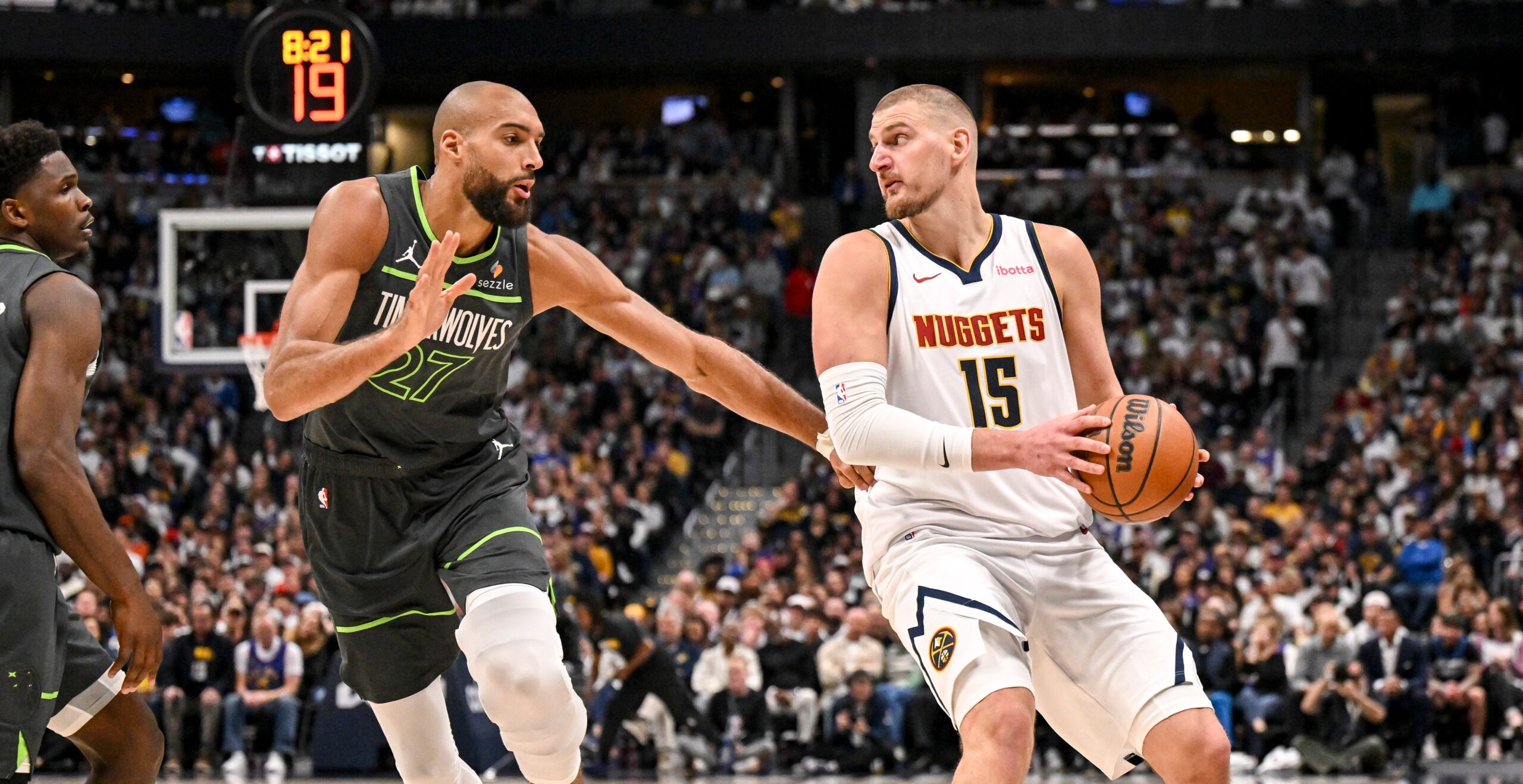
The best aspect of the Timberwolves’ Game 1 came from Rudy Gobert on offense. Gobert struggled mightily on that side of the ball last postseason, but did exactly what the team needed him to do on Saturday afternoon in Denver.
The best offensive action the Timberwolves had all night was the pick-and-rolls with Gobert as the screener. Many ball handlers found Rudy rolling to the rim, with Anthony Edwards specifically finding Gobert early and often with the defense tilted to stop the Wolves’ superstar guard.
Gobert himself caught each pass thrown his way and either made the correct next pass or made a move to the rim for a bucket.
“Both ends he did a good job,” Jaden McDaniels said. “He keep doing that, we’re going to win.”
When asked if this performance is repeatable, Gobert answered, “I think we shall see.”
The Bad: Ball Movement
The ball movement that drove the Timberwolves toward a double-digit lead in the first quarter dried up in the second and third quarters. As it so often has this season, the Wolves reverted to isolation basketball and took many ill-advised shots.
One of the main culprits was Edwards, who, after consistently finding Gobert and other teammates in the first quarter, settled for far too many bad shots the rest of the game.
“I don’t know,” Edwards said when asked about the lack of ball movement. “Yeah, I gotta go watch the film. I don’t know. I thought the ball was still kind of moving, but Finchy said the same thing. The ball stopped kind of moving, but I gotta go look at it.”
The player who suffers most due to the lack of ball movement is probably Jaden McDaniels.
In the first quarter and a half of Game 1, the Wolves used the defensive attention toward Edwards with the ball and Gobert rolling to the rim to generate open looks and driving lanes for McDaniels, which led to either open looks at the rim or free throw opportunities with Nikola Jokić guarding the rim.
All of that dried up later in the game as the ball got sticky, and isolation possessions were the primary action of the Wolves’ offense.
The Ugly: Late-Game Execution
The Timberwolves trailed by as many as 15 points in the third quarter but clawed back into the game. The Denver lead got as small as two points before the Wolves’ poor late-game execution prevented them from shrinking the deficit any further.
“Just key mistakes,” Randle explained. “Just little things, we put them on the free throw line. A bunch of little things at certain moments. We’d get it to five, and they’d go on a 4-0 run, 6-0 run, stuff like that. We just gotta limit our mistakes down the stretch and try not to put ourselves in that position by having a better third quarter.”
Late in the game, Gobert and Julius Randle each had awful turnovers, there were a pair of missed defensive rebounds that led to second-chance points for the Nuggets, and a pair of fouls from Randle that gave Aaron Gordon three free throws before Denver even had to run a play.
“We’ve got to make smarter, more solid plays,” Finch said about the plays late in the game. “We had two turnovers right in the middle of one run back. One in the paint, which was a tough pass for Rudy to handle, and then Rudy does a wraparound DHO, they poke away, and then we get the away from the play foul, and it just wasn’t very smart. We’ve got to be more composed.”